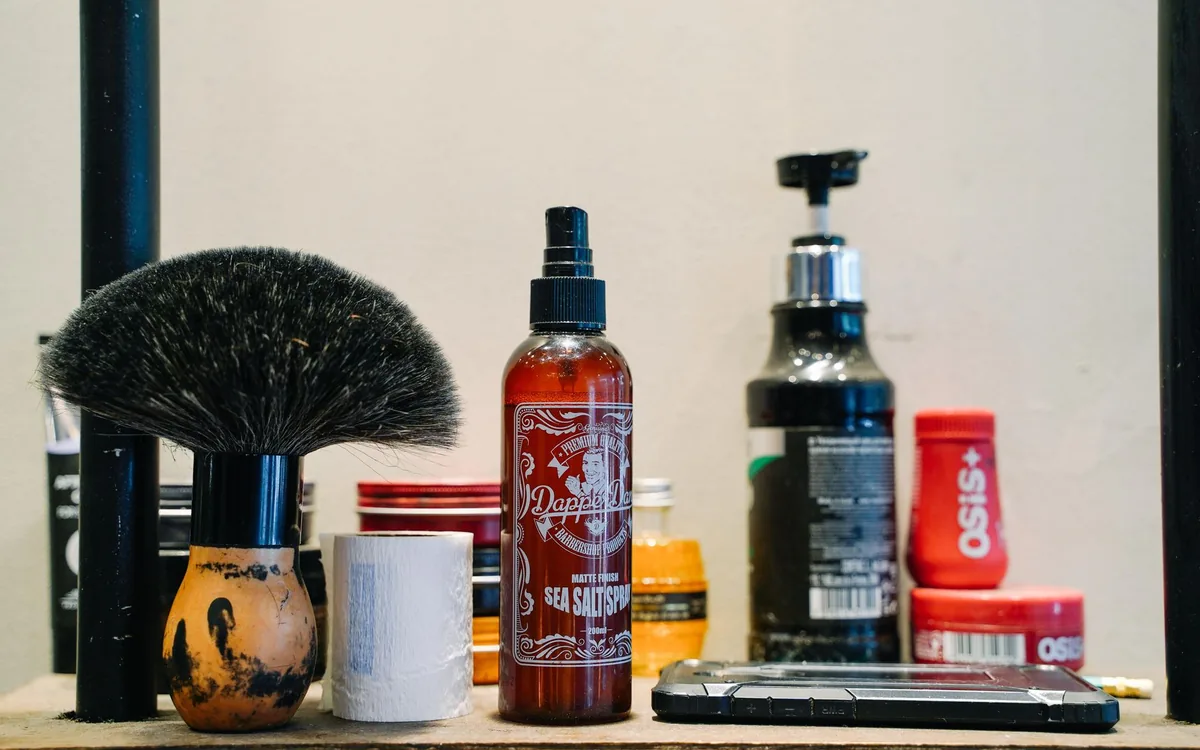
Almost every barbershop has a shelf with pomade, oil and balm. Almost every barbershop complains it does not move. And almost always the reason is the same: the product is there, but it is not in the conversation and not on the screen.
The natural sequence of a product sale
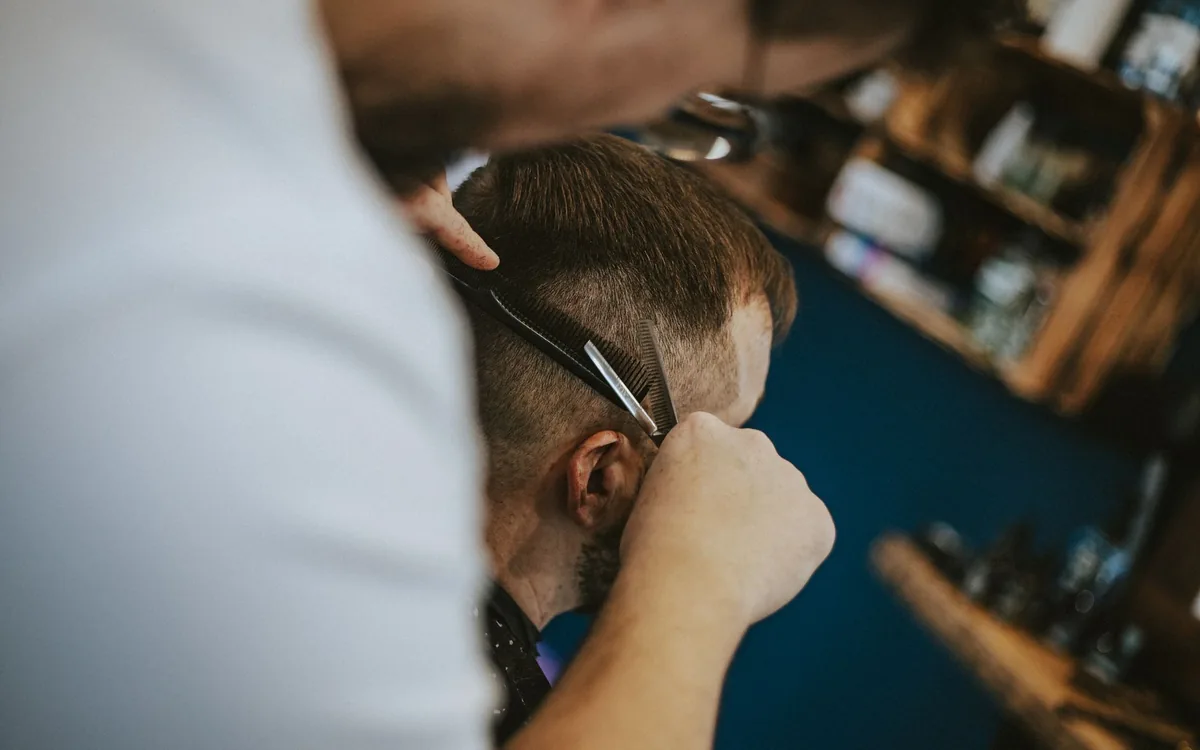
The barber finishes with the pomade that is on sale. The client sees the effect on their own hair, in the mirror.
“That’s the matte pomade, medium hold.” Fifteen words. No pitch, just information.
The product piece plays while they wait and during the cut, with the price visible.
“Want to take the pomade I used?” — which is not an approach, it is confirming something they have already seen three times.
Because the offer is a consequence of the service, not an interruption of it. The client has already tested the product on their own head — the sale becomes simply the decision to repeat it at home.
A visible price is not optional
A product without a price on the shelf does not sell: the client does not ask, they give up. Asking the price exposes someone to saying “oh, never mind” in front of other people — and nobody wants to go through that.
Kits sell better than single items
| Format | How the client sees it | Effect on ticket |
|---|---|---|
| Pomade on its own | A cost of 45 | Low |
| Pomade + shampoo kit | A complete routine for 79 | Medium |
| Kit + service in a combo | Complete grooming | High |
| Membership including product | Already paid for | Recurring |
What to show on screen about a product
- A photo of the product on your own counter, not on the manufacturer’s white background
- What it is for, in one line (“strong hold, matte finish”)
- A large, legible price
- One product per piece
- If there is a kit, show the saving as a number
Choose fewer brands
A shelf with four brands of the same thing does not increase sales — it increases indecision and tied-up capital. Two well-chosen lines, with one entry-level and one premium option, sell more than twelve labels.
Commission: the detail that unlocks everything
Without an incentive, the barber will not remember the product — he earns per cut, not per pomade. A commission on the sale turns the shelf into part of his job, rather than a favour to the owner.
Product is one of four revenue levers in the shop. The others are in how to raise your barbershop’s average ticket.
Put the pomade on the screen, not only on the shelf
Publish the product piece with its price from your phone and swap it with each campaign. 30 days free, no card.
Try it freeFrequently asked questions
What margin should I expect on retail?+
It varies by brand and purchase volume, but grooming products usually carry a better margin than the service — without consuming chair time, which is your scarce resource.
Is own-brand product worth it?+
It is once volume justifies it: better margin and a differentiated shop. Before that, prove the shelf moves with a known brand — own-brand does not fix a display problem.
How do I handle a client who says it is expensive?+
By comparing duration, not price: a jar that lasts three months costs less per day than a coffee. And always keep an entry-level option on the shelf to avoid a flat no.
Is product worth it in a small barbershop?+
It is, with lean stock. Start with two products you already use in the service — selling what you apply is the path of least resistance.