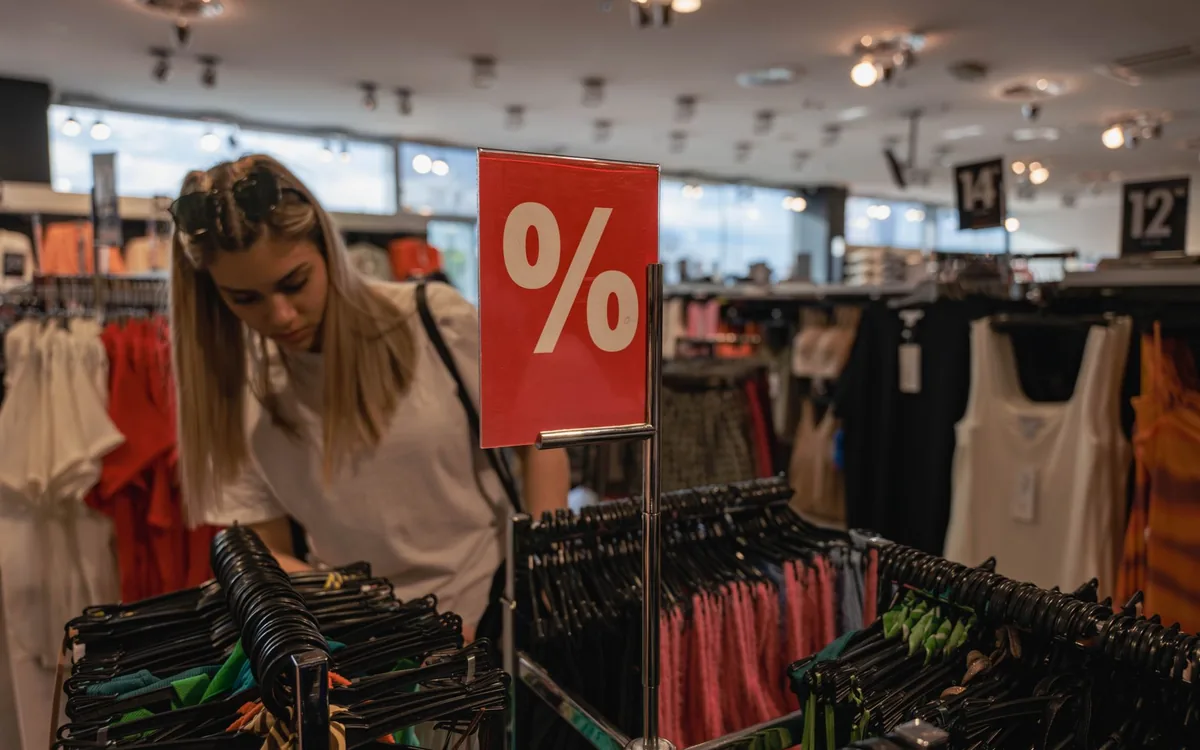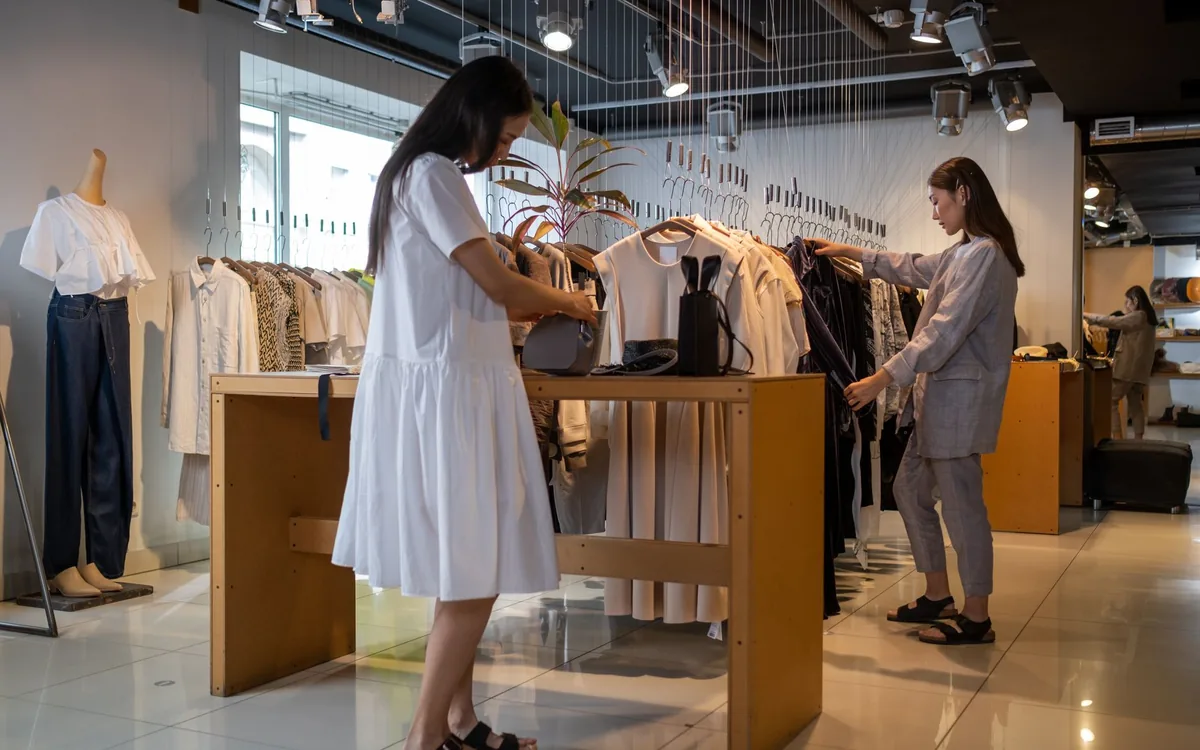
In fashion retail, a garment alone on a rail says very little: creased fabric, invisible drape, no sense of how to wear it. What sells is the piece worn and combined — and that is exactly what a rail cannot show.
What a digital window solves
- It shows the drape on a real person, in motion.
- It shows the combination — the trousers with the top and the accessory you also sell.
- It changes in minutes, with no mannequin, no build and no closing the shop.
- It communicates price and terms without a giant sticker in the window.
Changing a physical window costs hours of staff time and happens every 15 or 30 days. Changing the screen costs two minutes and can happen twice a day.
Where to put the screen inside the store
| Position | What to show | Objective |
|---|---|---|
| Window (facing the street) | New collection, campaign, discount | Pull footfall inside |
| Entrance | New arrivals and the week’s highlight | Set the shopping route |
| Near the fitting room | Complete looks, what goes with what | More items per visit |
| Till | Accessories, socks, jewellery, belts | Impulse purchase at checkout |
The fitting room is where the ticket grows
A customer walks in with two garments and leaves with one. It is the highest-intent moment in the whole store — and the least worked. A screen there showing “these trousers go with…” turns one sale into two, without depending on a sales assistant being free.
Production notes (fashion is image)
- Landscape photo, without cropping the head or feet off the look
- Store light or daylight — a dark photo kills the colour of the garment
- A legible price, or where to find the piece
- One look per piece, not a mosaic of ten photos
- A real model, from the audience that actually shops with you
A screen facing the street has one extra rule
Brightness. A standard TV in a window with sun on it simply disappears. If that is your case, the content needs high contrast (dark background, large light text) and the screen should ideally sit back from direct sunlight.
What to show at each point of the month
Early month calls for collection and looks; mid-month for combinations and accessories; end of month for payment terms and a targeted clearance. On that, see collection launches and sales without cheapening the brand.
Change your window in two minutes
Publish the look of the week to your store screen from your phone. 30 days free, no card.
Try it freeFrequently asked questions
Can I use the store’s Instagram photos?+
You can, as long as you reframe them for the landscape screen. A square post stretched or cropped on screen reads as improvised — the opposite of what a fashion store wants to convey.
Do I need to hire a model?+
No. Your own sales team wearing the pieces usually works better, because they represent the body and style of your real customer. With image consent, of course.
Video or photo?+
Both. A short video of someone walking shows the drape and catches the eye; a still with a price is what stays legible for someone passing quickly.
Does it work in a small neighbourhood store?+
It does, especially near the fitting room and the till. In a small shop, one screen covers the customer’s whole route.